AFSCME Let Me Down When I Needed Them Most
COMMENTARY BY TODD BURNS
Over the past eight years, as a Pennsylvania Utility Commission employee and member of AFSCME Council 13, which represents some 65,000 public employees here in Harrisburg and across the state, I’ve experienced this firsthand.
In 2018, I took a job at the PUC specifically because the position was covered by a union contract—one Council 13 had negotiated for employees. The contract stipulates my terms and conditions of employment, from pay scale to promotions to how grievances are processed.
It clearly says that promotions are awarded to the most qualified candidate, and that if two or more candidates are equally qualified, seniority breaks the tie. So I began positioning myself for a key promotion. After years of hard and careful work, I had achieved the highest rating for my position, one that to the best of my knowledge, no other candidate had attained.
I was the most qualified, and I was more senior than most of my colleagues—a shoo-in for the promotion, per the contract. Or so I thought.
Then state officials gave the position to a candidate with lower qualifications and less seniority than me.
I was shocked at what seemed like blatant rule breaking, but that’s why I had joined the union in the first place. I knew I had Council 13 in my corner for times like these.
I had paid the union thousands of dollars over the years and had never asked for a thing. But when I requested the union’s help to defend its own contract, it flat-out refused to process a grievance on my behalf.
If I was shocked when the state broke the contract, I was outraged when my union rolled over and let it happen.
I had to ask myself, if Council 13 wouldn’t even defend something as fundamental to a union as seniority, what other parts of the contract would it allow the state to trample?
And why was I paying the union each month if it was powerless to protect its members?
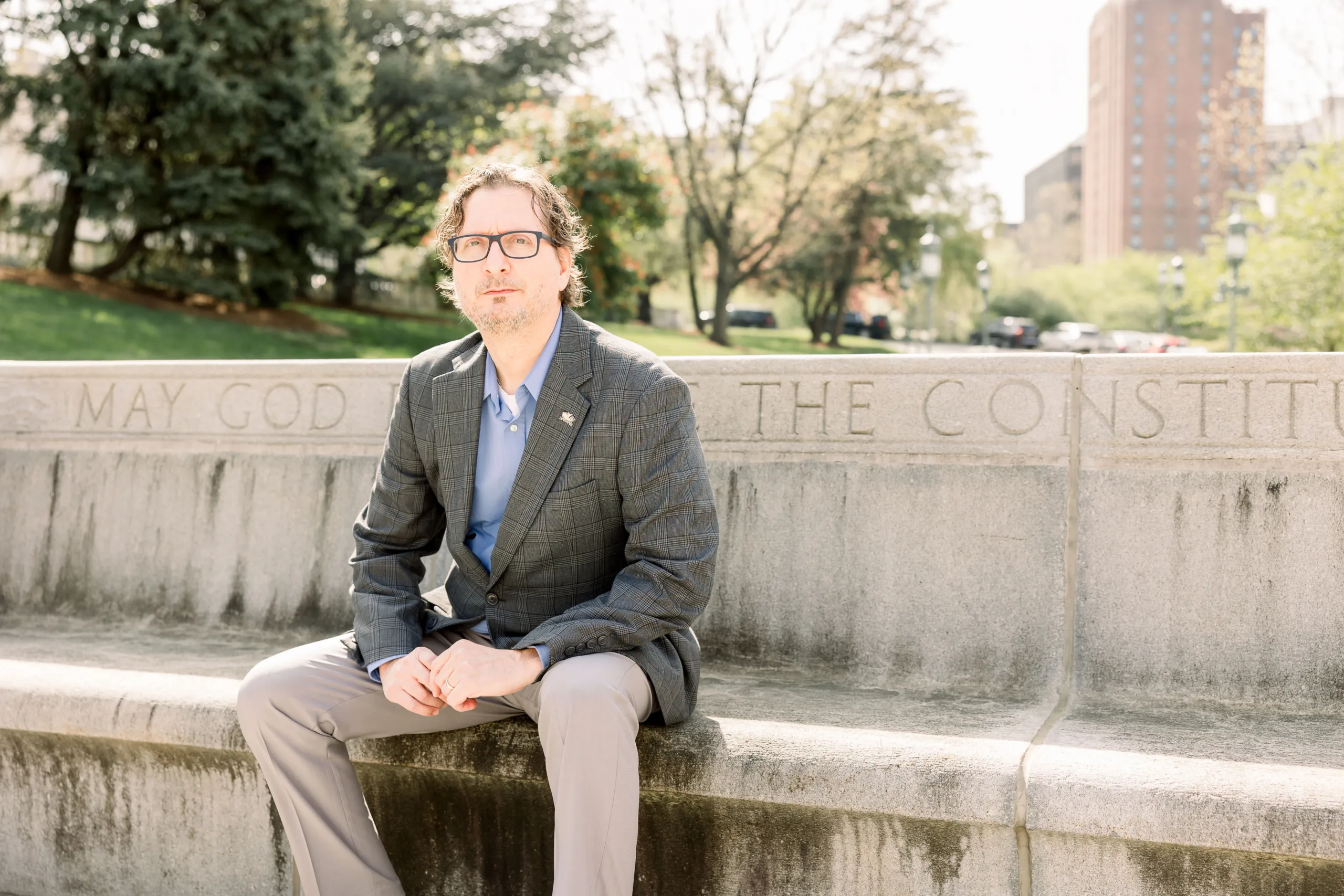
(Todd Burns, plaintiff in Burns v. AFSCME Council 13. Photo credit the Fairness Center.)
The truth is, unions have a legal obligation to fairly represent all members—and even nonmembers—in a bargaining unit.
Fairness is all I was asking for, not special treatment—that’s what I believe the person who was promoted instead of me received. The PUC chose someone less qualified and less senior than me, but who happened to be a friend and former colleague of the hiring manager.
I believe the union and the state worked together against me, a dues-paying member, so that a PUC official could reward his buddies.
Without Council 13’s help, I was stuck. I had no way to defend myself and fight for the position I had rightfully earned—outside of costly litigation. But with free legal help from the Fairness Center, a nonprofit law firm headquartered in Harrisburg, I sued the state and the union this spring.
I want to ensure that state officials follow the contract they signed and handle promotions fairly. And I want to hold Council 13 officials accountable for siding with management instead of doing their duty to represent me.
After all, what’s the point of joining a union—and paying dues—if the union isn’t going to advocate for your interests?
After reports of a decline in Council 13’s membership along with financial problems, it would seem more important than ever for union officials to take care of the fundamentals. Defending their own contract shouldn’t be a heavy lift. It’s the bare minimum that members deserve.
Workers like me don’t need slogans or empty promises—we need unions that actually enforce their contracts. Until that happens, more of us will be left wondering who our unions actually represent.
Todd Burns is a Utilities Complaints Investigator for the Pennsylvania Utility Commission and lives in Harrisburg. The author’s opinions do not necessarily reflect those of the Fairness Center.